Common Materials
Limestone, granite, basalt, quartz stone, river pebble, sandstone, gypsum, shale, iron ore and other hard or medium-hard materials.
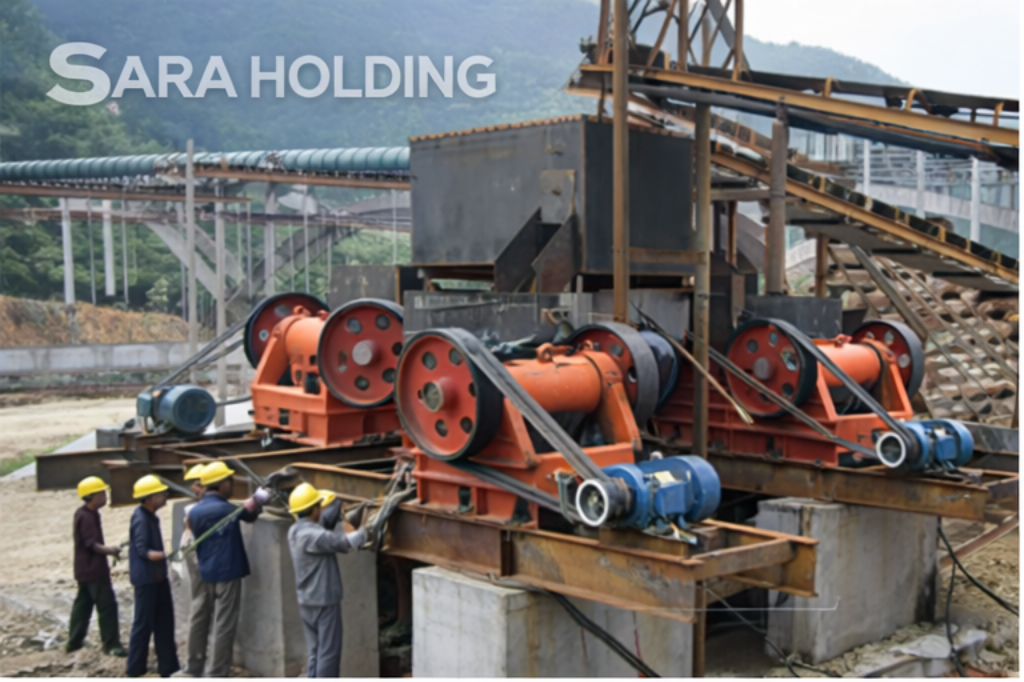
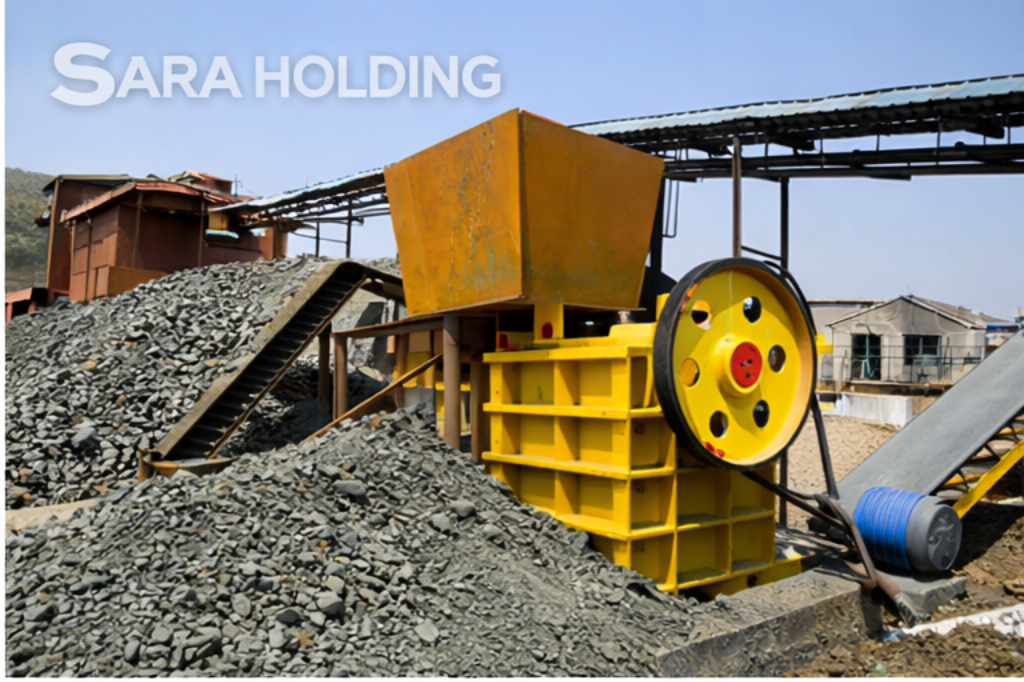
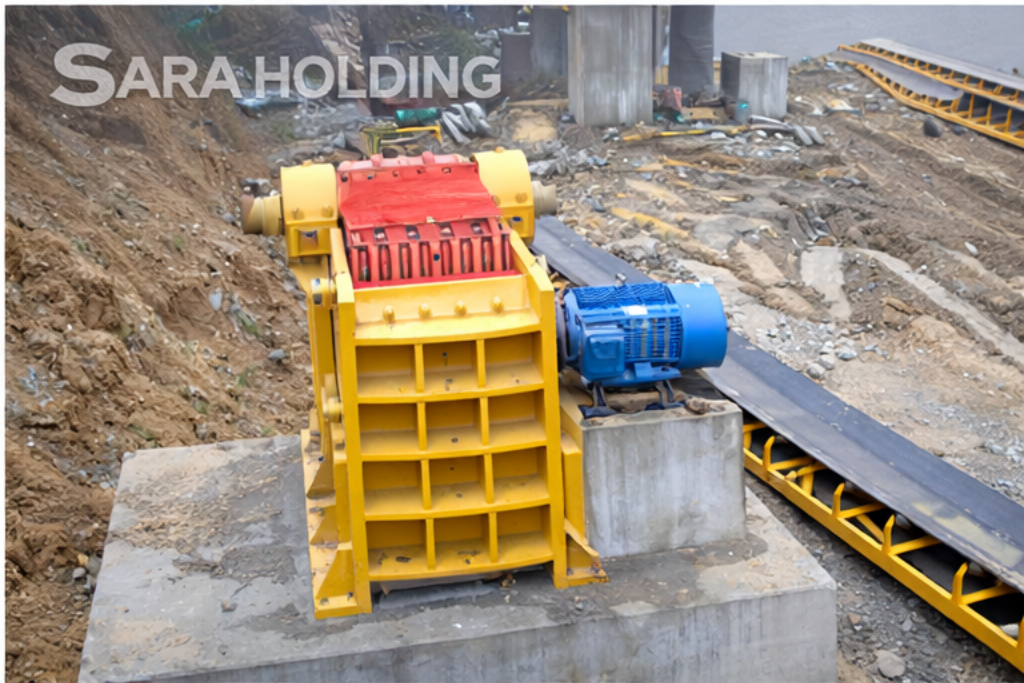
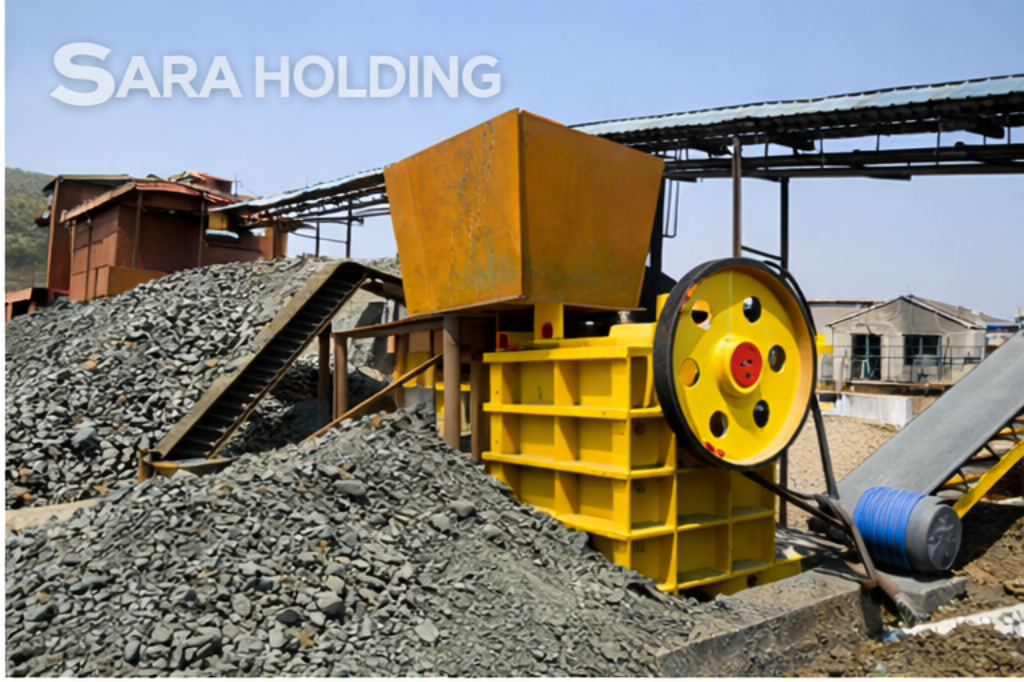
SARA Holding supplies jaw crushers for primary crushing of hard rock, ore, limestone, granite, basalt, river stone, concrete feed and other mineral materials. Our crusher solutions are suitable for mining operations, quarry plants, recycling lines and aggregate production projects.

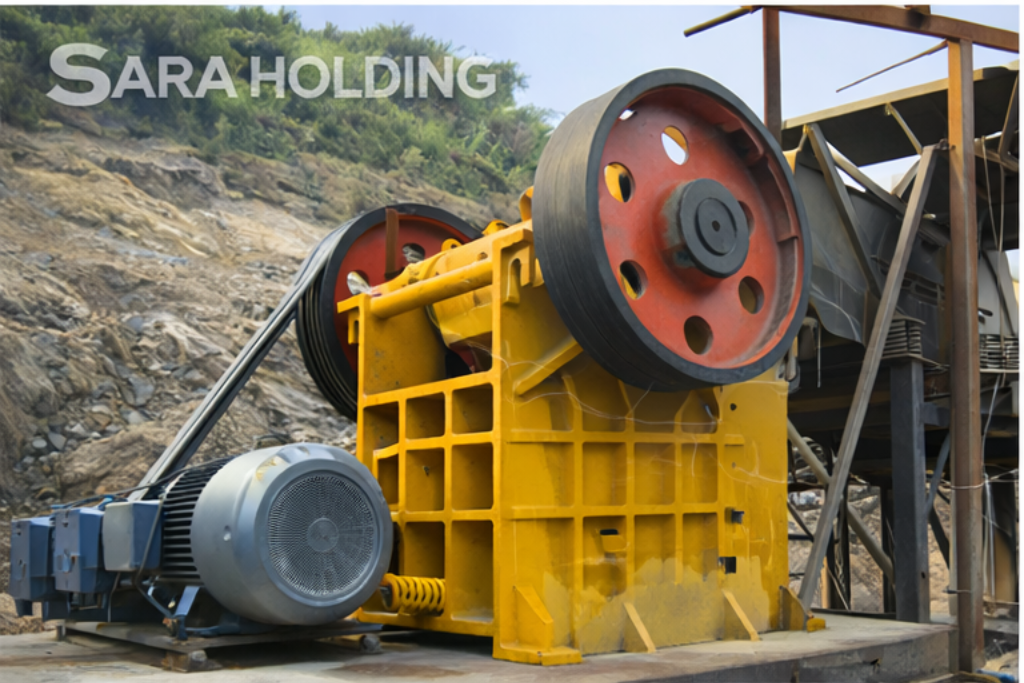
A jaw crusher is a primary crushing machine that uses a fixed jaw plate and a moving jaw plate to compress and break material. It is commonly used as the first stage in crushing lines where large rocks or ore need to be reduced before secondary crushing, screening, grinding, or beneficiation.
Limestone, granite, basalt, quartz stone, river pebble, sandstone, gypsum, shale, iron ore and other hard or medium-hard materials.
Mining operations, quarry plants, road-base stone production, construction aggregate, concrete recycling and mineral processing plants.
Jaw crushers are valued for strong primary crushing performance, simple structure, dependable operation and easier maintenance compared with many more complex systems.
The machine crushes material between a stationary jaw and a moving jaw. The movable jaw is driven by an eccentric shaft and toggle mechanism, creating a repeated compressive action that breaks the feed material and allows smaller pieces to discharge through the bottom opening.
By adjusting the discharge opening, the final output size can be controlled for the next stage of the plant, whether screening, secondary crushing, milling or concentration.

Suitable for large feed material and tough rock in the first stage of the process line.
Easy to inspect, service and maintain in demanding mining and quarry environments.
Designed for steady production in fixed plants and heavy-duty industrial use.
Jaw plates and key contact parts can be replaced as part of routine maintenance planning.
Can be used for ore, rock, quarry stone, recycled concrete and other feed materials.
Works well before screens, conveyors, cone crushers, hammer mills, ball mills and washing lines.
The source manufacturer lists PE and PEX models ranging from small units such as PE-250×400 and PEX-150×750 up to larger models such as PE-1200×1500, with capacity increasing according to feed opening, motor size and discharge setting.
| Model | Feed Opening | Max Feed Size | Discharge Range | Capacity | Motor |
|---|---|---|---|---|---|
| PE-250×400 | 250×400 mm | 210 mm | 20–60 mm | 3–13 t/h | 15 kW |
| PE-400×600 | 400×600 mm | 340 mm | 40–90 mm | 10–35 t/h | 30 kW |
| PE-500×750 | 500×750 mm | 425 mm | 50–100 mm | 25–60 t/h | 55 kW |
| PE-600×900 | 600×900 mm | 500 mm | 65–180 mm | 30–85 t/h | 55–75 kW |
| PE-900×1200 | 900×1200 mm | 780 mm | 95–255 mm | 100–240 t/h | 110–132 kW |
| PE-1200×1500 | 1200×1500 mm | 1020 mm | 150–300 mm | 250–500 t/h | 160 kW |
| PEX-250×1000 | 250×1000 mm | 210 mm | 25–60 mm | 10–32 t/h | 30–37 kW |
| PEX-300×1300 | 300×1300 mm | 250 mm | 20–90 mm | 10–65 t/h | 75 kW |